
Mistra Mineral Governance's Report for 2024/2025 is out!
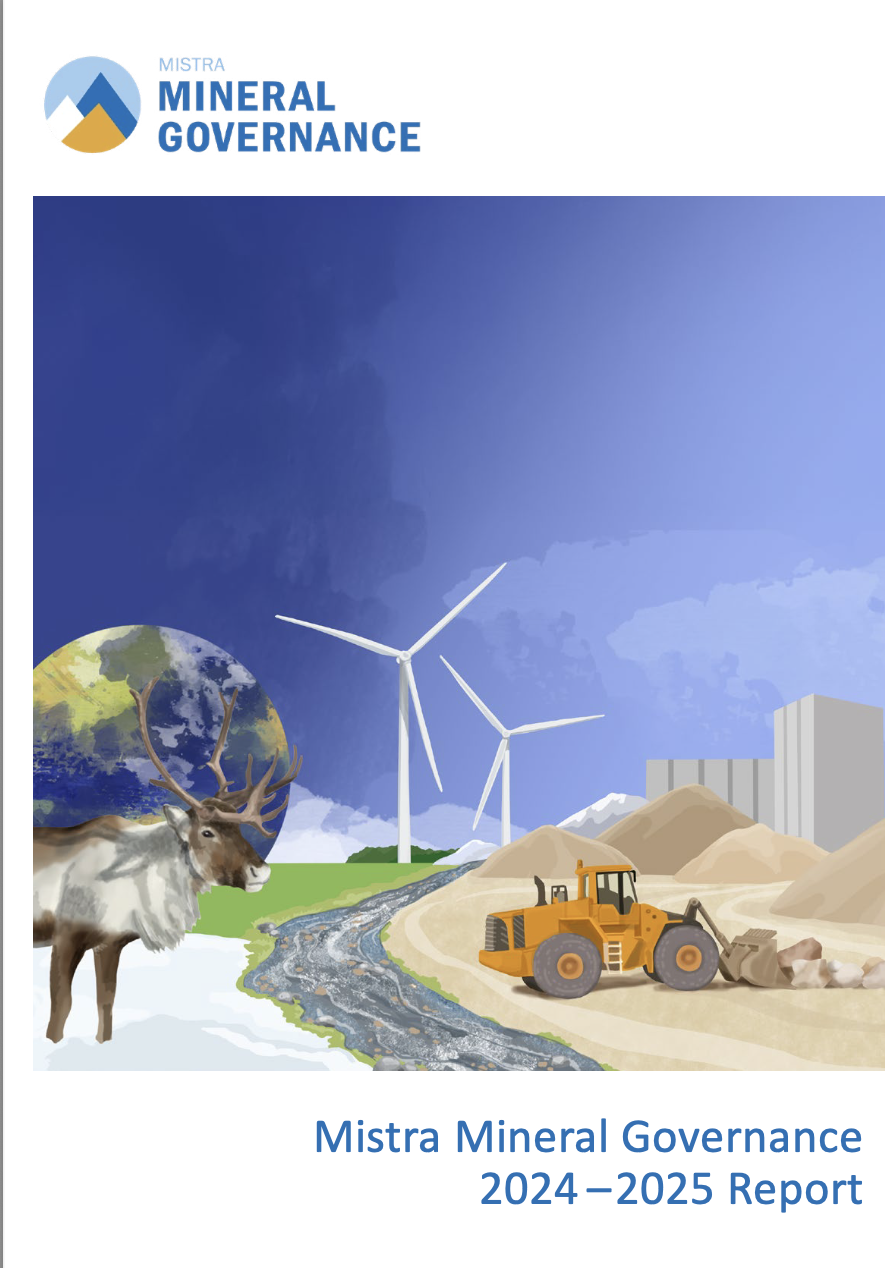
Cover of Mistra Mineral Governance Report 2024/2025
We are delighted to present our programme report for 2024/2025. It contains highlights and impacts from our first two years as a programme, with focus on key research within our work packages, scientific output and media participation.
Director’s Word
“Since the start of our programme, in 2024, a lot has happened, both within our research and in the world at large.”
“Maybe the most significant change is how countries across the world are increasingly connecting access to critical raw materials to matters of national security. With ongoing wars and geopolitical conflicts, this development is not surprising as countries are eager to secure resilient and predictable mineral supply chains. At the same time, the need for materials for the energy transition is increasing, as more countries are realising the urgency to phase out fossil fuels. Increased defence spending also contributes to demand for minerals and accentuates supply security.”
“For us as researchers, this means that we are working on a topic that could not be timelier. It is exciting and humbling to explore and study critical raw materials from a range of different perspectives; presented by the different researchers and organisations within our programme.”
“We believe that this plurality of theoretical entry points is one of the key strengths of our programme – as we learn from each other and collaborate on case studies and research papers. This approach allows us to deepen our understanding of critical raw materials, and in the long run formulate more insightful and holistic recommendations and solutions.”

André Månberger, Mistra Mineral Governance Director
“During these two years, we have researched goal conflicts, geopolitical dimensions of critical raw materials and criticality connected to raw materials. So far, our research points to interesting findings pertaining to for example criticality, where we can show how materials might be less critical than what was previously thought, as innovation supports markets to develop new battery technologies. We can also highlight how national security is emerging as a key justification for access to critical raw materials in different countries’ policy documents – a trend that risk downplaying other important perspectives such as environmental impacts and adverse effects on Indigenous People and local communities. We have also started developing methods for integrating human rights assessment into mining planning processes – something we see as a key path for ensuring fairer and more sustainable mining; where different groups are able to contribute and participate.”
“During the next two years, we plan to finalise a range of research papers, and to disseminate our results, all with an aim to support societies recognise and balance the complex trade-offs and synergies between access to critical raw materials and democratic governance.”
André Månberger, Director for the Mistra Mineral Governance programme
Download the Mistra Mineral Governance Report 2024/2025